

The term "Mini Facelift" has gained popularity as a quick-fix solution, promising significant facial rejuvenation with less downtime and a shorter scar. While appealing in theory, Dr. Brandyn Dunn, a board-certified facial plastic surgeon, holds a firm and evidence-based stance against the "Mini Facelift" approach. He views it as a fundamentally limited procedure that fails to address the true underlying causes of facial aging, leading to inferior, short-lived, and often unnatural results.
Dr. Dunn's core philosophy is centered on comprehensive and lasting facial harmony. Because a Mini Facelift typically only addresses the skin and superficial tissue, it cannot achieve the deep structural correction necessary to provide true rejuvenation across the jawline and neck. We believe patients deserve a procedure that offers enduring value, not a temporary solution.
A Mini Facelift is generally defined by two factors: a shorter incision (often ending at the earlobe rather than extending into the hairline) and a limited surgical scope. This procedure rarely addresses the deeper, structural layers of the face.
Technical variations of the Mini Facelift usually involve either:
This shallow approach is the source of its major weakness. Since facial descent is caused by the loosening of deep ligaments and tissues—not just loose skin—a superficial procedure cannot truly reposition the sagging elements. The result is a short-term tightening effect, followed by a rapid return to the pre-operative state.
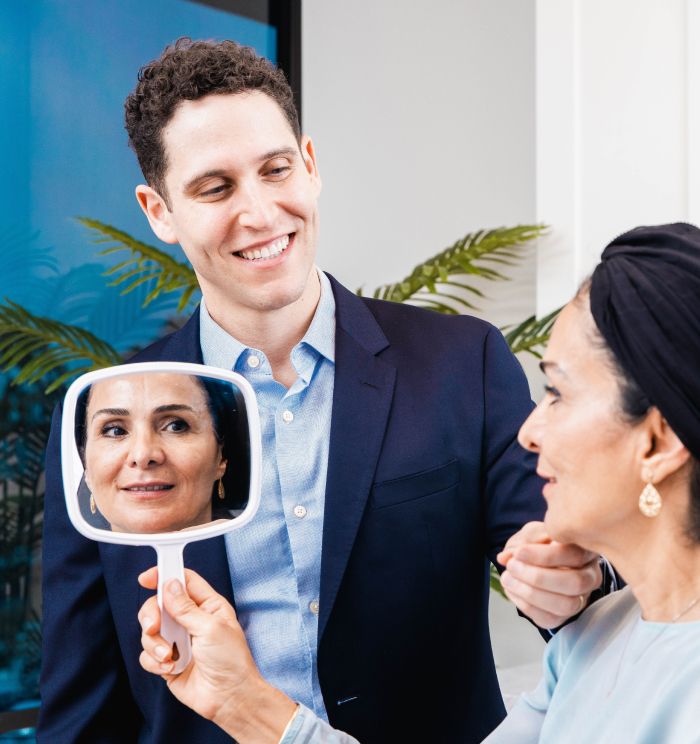

Dr. Dunn advocates for the Deep Plane Facelift or a comprehensive SMAS technique because these procedures:
By repositioning the foundation, the Deep Plane Facelift provides a powerful, long-lasting lift with absolutely zero tension on the skin. The skin simply drapes naturally over the newly lifted and secured underlying structure.
Longevity: A proper deep lift can easily last 10 to 15 years, offering a much better return on the patient's investment of time and resources. Natural Results: Because the tissues are lifted as a natural unit, the expression remains untouched, and the results move naturally with the face. Complete Correction: The extended access allows Dr. Dunn to fully address the entire neck contour, including the deep neck fat and the platysma muscles, resulting in a crisp, sharp cervicomental angle that is simply unachievable with a Mini Facelift.
The term "Mini" often implies less risk, but this is a misconception. Any procedure that relies on pulling the skin risks an unnatural result, potentially requiring a costly revision surgery sooner than expected.
Dr. Dunn believes the greatest value lies in the artistry and technical mastery required for a comprehensive facelift. When performed by a board-certified facial plastic surgeon, the Deep Plane approach provides a highly secure and predictable result—one that truly turns back the clock on the aging process rather than offering a temporary camouflage.


Schedule your personalized consultation to discuss a comprehensive, long-lasting rejuvenation plan.
Contact our office at (949) 849-0336 or use our online booking tool to request an appointment for a Facelift consultation.