
I see a lot of patients who spend thousands of dollars on high-end skincare, lasers, and fillers for their face, yet they feel like they still look tired or older. When we sit down for a consultation, and I hold up a mirror to their profile, the culprit is almost always the neck.
The neck is often the honesty zone of aging. Because the skin there is thinner and the underlying muscles are in constant motion, it tends to lose its structural integrity faster than the face. What most patients don’t realize is that by the time you’re looking for a turtleneck or a scarf to hide your neck, you’ve likely missed the early window for a proactive neck lift.
Identifying these shifts early, before the neck skin completely loses its snap, allows for a much more natural restoration. You can focus on maintaining the foundation rather than trying to rebuild it after it’s collapsed.
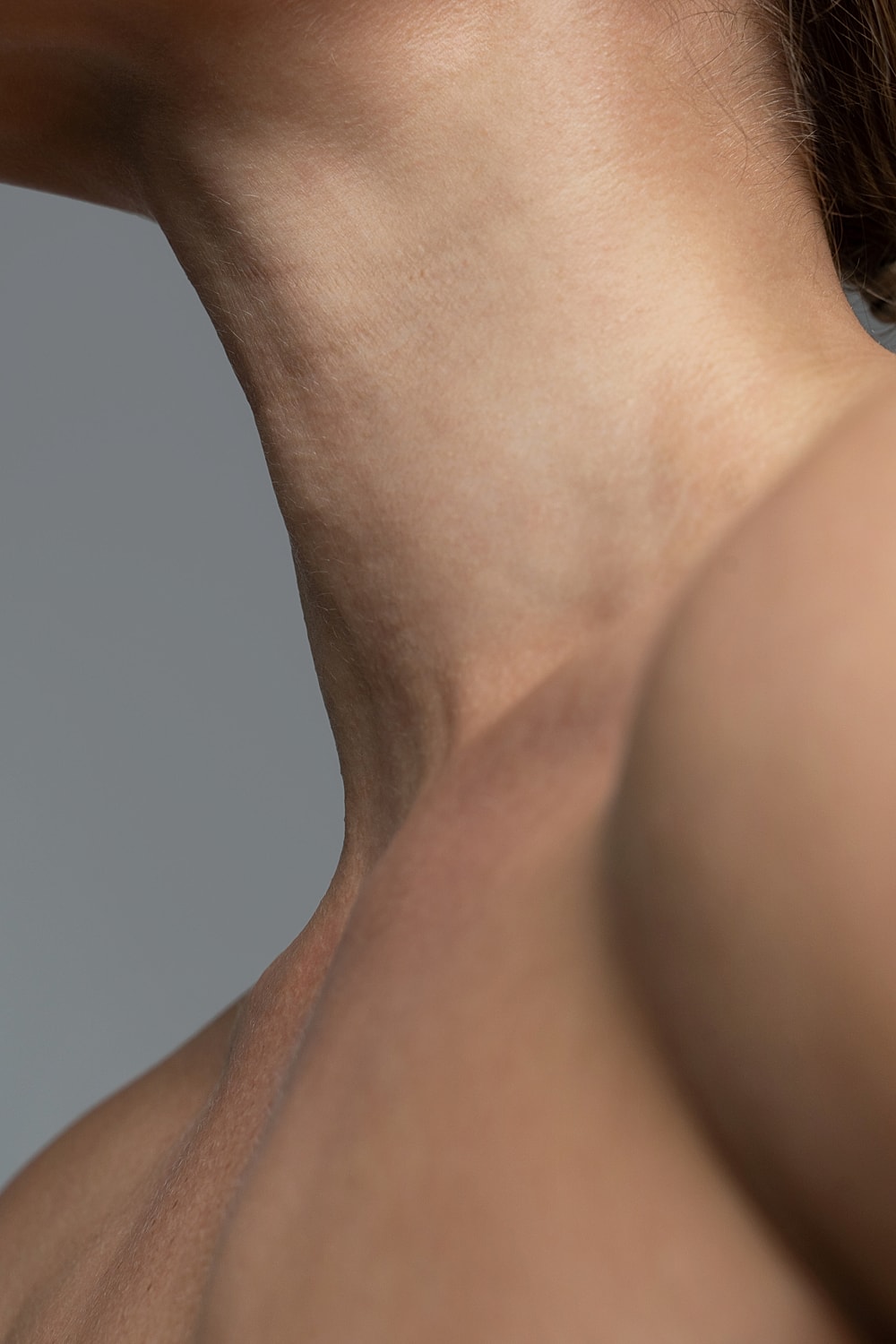

We rarely see ourselves the way the world sees us. We look at ourselves straight-on in the bathroom mirror, but the world sees us in three dimensions. The first sign that you may be a candidate for a neck lift surgery isn't a deep wrinkle. It’s a loss of definition in your cervicomental angle, the L-shaped transition between your chin and your neck.
When the platysma muscle (the thin sheet of muscle covering the neck) begins to relax, it starts to pull away from the jaw. This is what creates that soft or blurred look where your jawline and neck just kind of blend together. If you find yourself tilting your head up in photos just to get some jawline definition back, your neck is already telling you that things have started to shift. At this stage, nonsurgical rejuvenation treatments might help the surface, but they won't fix a muscle that’s actually sagging.
If you look in the mirror, say the letter "E" emphatically, and notice two vertical cords popping out from your chin down to your collarbone, you’re looking at platysmal bands. In a young neck, these muscle edges are tucked away and invisible. As we age, the muscle weakens and splits, creating those stringy vertical lines.
While some non-surgical treatments can temporarily relax these neck bands, they don't solve the fact that the muscle itself is splitting. A neck lift actually addresses the root cause by tightening those muscle edges back together, creating a permanent internal support system. If those bands are visible even when your face is totally relaxed, it’s a sign that the aging process has moved past the skin and into the muscle.
We hear a lot about Tech Neck causing horizontal wrinkles, but the real issue is what happens to your skin's laxity when you are constantly looking down. If you look straight ahead and your neck skin looks smooth, but the moment you look down at your phone, the skin bunches or tents excessively, the elastic fibers in your skin are starting to wear out.
When the skin loses its snap, it can no longer shrink-wrap to the contours of your jaw. In an active, outdoor community like Newport Beach, sun exposure and the elements often speed up this skin relaxation. If you can pinch the loose skin under your chin and it takes more than a split second to bounce back, the structure has changed.
Addressing this with a surgical procedure while you still have decent elasticity usually leads to a much more natural appearance than waiting until the turkey wattle is really advanced.
I often have patients come in who feel they’ve waited too long. They already have significant excess skin, deep jowl lines, and what’s commonly called a turkey neck. If you feel you’ve missed that early pre-juvenation window, don't worry, you haven't missed the opportunity for a rejuvenated appearance. It just means we need a more dramatic rejuvenation strategy.
When the aging process is advanced, we move from a localized neck lift into a comprehensive rejuvenation of the face and neck. This usually involves a deep plane approach. Instead of just tightening the neck area, we address the lower face and neck as one cohesive unit. We reposition the deeper structures that have fallen, remove the excess skin, and restore youthful contours.
Even if the signs of aging are advanced, we can still achieve natural-looking results by focusing on the underlying tissues rather than just pulling on the neck skin. It just takes a more involved restorative surgery to bring the foundation back.


I see patients frequently who come in asking for liposuction because they think they just have a double chin. Liposuction only removes excess fat, it does nothing for the muscle or the sagging skin. If I remove fat cells from a neck that already has skin laxity, the skin will often hang even more loosely, like a balloon that’s lost its air.
If your only issue is a pocket of fat and your skin is still tight, liposuction is a great cosmetic procedure. But if you have fat plus those vertical bands or excess wrinkling, you need a lower rhytidectomy.
A hybrid approach, using a touch of liposuction to sculpt the area, followed by removing excess skin and tightening the muscle, is often what it takes to get that snatched look you see on social media.
There is a common misconception that you should wait until your 60s to consider plastic surgery. From a clinical perspective, performing a restorative surgery earlier, often in your late 40s or early 50s, makes the whole result look much more seamless.
By improving visible signs of aging now, you avoid the aged appearance that can make your whole face feel heavy. It’s a significant difference that really boosts self esteem and provides long-lasting results. Because a board-certified plastic surgeon hides the incisions in natural creases, the rejuvenated appearance remains discreet.
When we address sagging early, we can achieve optimal results with less invasive work. After the procedure, my team provides detailed instructions to ensure you are back to your routine in a few weeks, enjoying a profile that finally matches the rest of your face.